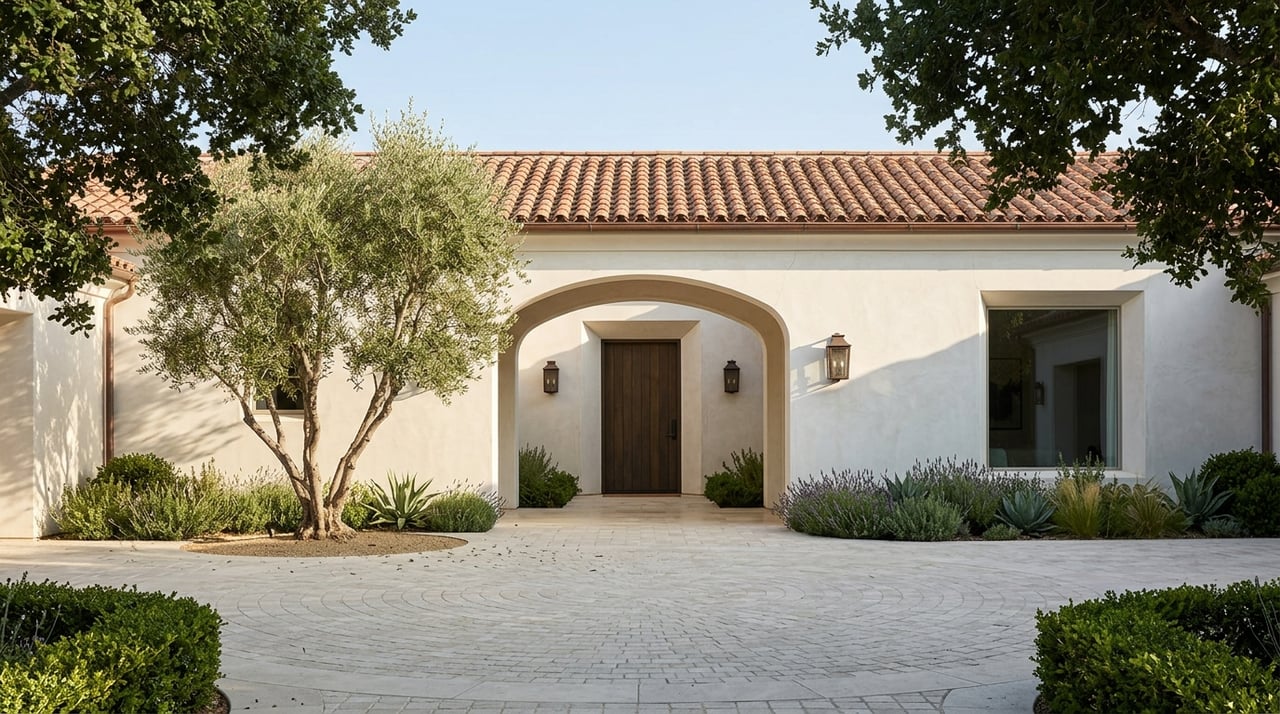
If you own a legacy estate on Winding Way, your next move is rarely as simple as renovate or sell. In this part of Central Malibu, each property tends to function more like a custom land-use case than a standard resale, with private-road access, varied parcel sizes, view considerations, and layered coastal oversight shaping what is practical. The good news is that with the right strategy, you can better protect value, reduce surprises, and choose a path that fits your goals. Let’s dive in.
Why Winding Way Needs Strategy
Winding Way-De Butts Terrace is a distinctive Malibu enclave, not a conventional tract neighborhood. The City of Malibu describes it as an area of about 100 properties north of Pacific Coast Highway to Escondido Falls, served by private roads, with parcels that commonly range from two to five acres but can vary from roughly one-third of an acre to more than 100 acres. That mix of lot sizes, topography, and view orientation means your estate may face a very different planning profile than the property next door, as outlined in the City’s neighborhood description.
The regulatory setting is just as important. Because all of Malibu sits within the California coastal zone, development review is layered through the City’s Local Coastal Program, with some matters also subject to appeals. According to the City’s Local Coastal Program overview, even ADU applications are reviewed under coastal and local rules, which is a strong reminder that long-term estate planning here should begin with parcel-specific verification.
Four Main Paths for Legacy Estates
Most owners of long-held Malibu estates are evaluating some version of four options: hold and improve, sell as-is, adjust parcel boundaries, or reposition for income. The best path usually depends on zoning, slope, permit history, and timing more than curb appeal alone.
Hold and Improve
For many families, the most attractive option is to keep the estate and modernize it carefully. Malibu code allows previously approved and existing single-family residences to remodel within pre-remodel lot coverage, height, setbacks, and volume, while larger changes must meet current standards. The City also reviews factors such as ridgelines, grading, landscaping, and neighborhood compatibility under its development rules, as shown in the relevant code provisions.
That can be a meaningful advantage if your goals are centered on preservation, usability, and long-term value. If you can work within the existing development envelope, your planning path may be more straightforward than starting with a larger expansion concept that triggers broader compliance issues.
Views matter here too. Malibu can establish a primary view corridor, and once documented, that determination becomes binding on future owners. The City’s primary view determination page makes clear why early analysis of siting and landscaping can be an asset-planning issue, not just a design detail.
Timing should also shape your decision. Malibu states that an administrative coastal process may take about three to six months, while a full coastal development permit can take about 12 to 18 months. If you are considering improvements before a transfer, refinance, or family transition, that timeline can materially affect the right sequence.
Sell As-Is
An as-is sale can make sense when the estate’s value is driven more by land, location, and future potential than by turnkey condition. In a market like Malibu, however, buyers still look closely at entitlement risk, hazard exposure, and documentation.
The City states that all Malibu properties are within a Very High Fire Hazard Severity Zone, which makes residential sales subject to AB 38 defensible-space documentation. The City also notes that properties in FEMA flood zones must meet applicable floodplain rules for development, redevelopment, remodels, and repairs, and onsite wastewater systems may require permits at sale or for short-term rental use. You can review those requirements on the City’s AB 38 information page.
In practical terms, presentation is not only about photos and staging. For a Winding Way estate, buyer confidence can improve when permit files, septic records, defensible-space compliance, flood-zone status, and any past unpermitted work are organized early. Clean documentation helps buyers understand risk, and that often supports stronger pricing and smoother negotiations.
Subdivide, Merge, or Adjust Boundaries
For some owners, the real opportunity is not in the existing house at all. It may be in the land configuration. That said, Malibu’s rules are specific, and the answer is always parcel-dependent.
Within Malibu’s RR districts, minimum lot areas vary by designation: RR-1 requires one acre, RR-2 requires two acres, RR-5 requires five acres, RR-10 requires 10 acres, and RR-20 requires 20 acres. On top of that, Title 16 applies a slope-density formula, which can increase the effective minimum lot size as terrain becomes steeper, as described in the City code for the RR district.
This is why two estates on Winding Way can have very different strategic profiles. Malibu records show Winding Way parcels appearing in RR-1, RR-2, and RR-5 contexts, and City mapping materials also reflect zoning changes for at least one Winding Way parcel in the coastal record. The City of Malibu Housing Element appendices help illustrate how important parcel-level verification can be.
It is also important to separate a subdivision from a lot line adjustment. A lot line adjustment can shift boundaries between adjacent parcels, but Malibu’s code does not allow it to create a greater number of parcels than originally existed. The lot line adjustment provisions make that distinction clear, which is why this tool is often better for estate repositioning than for creating new density.
In some cases, a lot merger may also support a broader estate plan. Recent Malibu approvals show that large projects can involve several approvals at once, including coastal development permits, site plan review, variances, modifications, and mergers. A recent City agenda item is a useful reminder that the question is often how many approvals a plan needs, not just whether a plan is possible.
Reposition for Income
Some legacy owners explore income strategies to offset holding costs or improve flexibility. On Winding Way, that usually starts with ADUs, JADUs, or rental use, but neither should be treated as automatic.
Malibu states that all ADU applications are subject to the Coastal Act and the Local Coastal Program because the entire city lies within the coastal zone. The City code section covering ADUs and JADUs reinforces that these units remain both a zoning and coastal review matter.
Short-term rental use is even more sensitive. Malibu states that advertising or operating residential property as a short-term rental without a permit violates Chapter 17.55, with fines of $1,000 per day for unauthorized short-term rental use and $500 per day for other violations, according to the City’s Short-Term Rental Ordinance page.
For that reason, an income plan should be tested before it becomes part of your valuation or marketing narrative. If the estate’s appeal depends partly on future rental flexibility, you want to confirm the actual permit path first.
What Drives the Best Outcome
On legacy estates in Malibu, square footage tells only part of the story. Timing, entitlement complexity, and documentation often drive the final result just as much.
For example, a remodel within an existing envelope may support a low-disruption hold strategy, while a more ambitious redesign could trigger a longer review process with greater uncertainty. A parcel with favorable zoning and gentler slope may lend itself to a boundary adjustment discussion, while another may be better positioned for a clean as-is sale with a fully prepared disclosure package.
Presentation also matters because Malibu’s standards are highly visual. The City reviews ridgelines, grading, and neighborhood compatibility, and view corridors can directly shape future use. That means the right positioning of an estate is often part planning exercise, part storytelling exercise, and part risk management.
Questions to Answer Before You Decide
Before you commit to a strategy for a Winding Way estate, these are the questions worth answering first:
- What is the exact APN zoning and Local Coastal Program designation?
- Is the parcel in an appealable coastal zone?
- Can the existing residence be remodeled within its current envelope?
- Would your plan trigger a coastal development permit, site plan review, variance, or modification?
- If land strategy is the goal, does the parcel satisfy RR minimum lot size and slope-density rules?
- Would a lot line adjustment or lot merger better serve your objective than a subdivision?
- Is an ADU or JADU realistically feasible under current coastal and local review?
- What hazard-related documentation should be prepared now, including AB 38, floodplain status, and onsite wastewater records?
If the estate may transfer within a family, tax and basis questions can also be part of the conversation. The California State Board of Equalization notes that Proposition 19’s family-home or family-farm exclusion can apply up to the factored base-year value plus $1,044,586 if the required exemption is filed within one year, while the IRS states that inherited property basis is generally the fair market value on the date of death or an alternate valuation date if elected. Those rules are highly situation-specific, but the BOE guidance is a useful starting point for broader planning discussions.
A More Informed Way to Plan
For Winding Way, the strongest strategy is rarely based on the street alone. It is based on your parcel’s exact zoning, slope, coastal status, permit history, and your timeline for action.
That is where experienced local guidance can make a real difference. Whether you are considering a discreet sale, evaluating land-use potential, or preparing a legacy property for its next chapter, working from a clear fact base helps you protect value and move with confidence. If you are weighing strategic options for a Malibu estate, Irene Dazzan-Palmer offers the local perspective, discretion, and tailored market guidance that these properties demand.
FAQs
What makes Winding Way estates different from other Malibu properties?
- Winding Way properties are often accessed by private roads, vary widely in parcel size, and may involve site-specific issues tied to views, slope, fire exposure, and coastal review rather than a standard resale framework.
What should owners verify before remodeling a Winding Way estate?
- You should verify the parcel’s zoning, Local Coastal Program designation, appeal-zone status, existing development envelope, and whether the proposed scope would trigger additional approvals such as a coastal development permit or variance.
What does an as-is sale of a Malibu legacy estate still require?
- Even in an as-is sale, buyers will often focus on AB 38 defensible-space documentation, flood-zone status, septic or onsite wastewater records, permit history, and any unpermitted work.
What is the difference between a subdivision and a lot line adjustment in Malibu?
- A subdivision can create additional parcels if zoning and slope-density rules allow, while a lot line adjustment only shifts boundaries between existing adjacent parcels and cannot increase the number of parcels.
What should owners know about ADUs on Winding Way in Malibu?
- ADUs and JADUs are not treated as simple by-right additions in Malibu because all applications are still subject to Coastal Act and Local Coastal Program review.
What should owners know about short-term rentals for Malibu estates?
- Short-term rentals require compliance with Malibu’s permit rules, and unauthorized operation or advertising can lead to significant daily fines under the City’s ordinance.
What timing should owners expect for Malibu coastal permits?
- Malibu states that an administrative coastal process may take about three to six months, while a full coastal development permit may take about 12 to 18 months, depending on the project and review path.