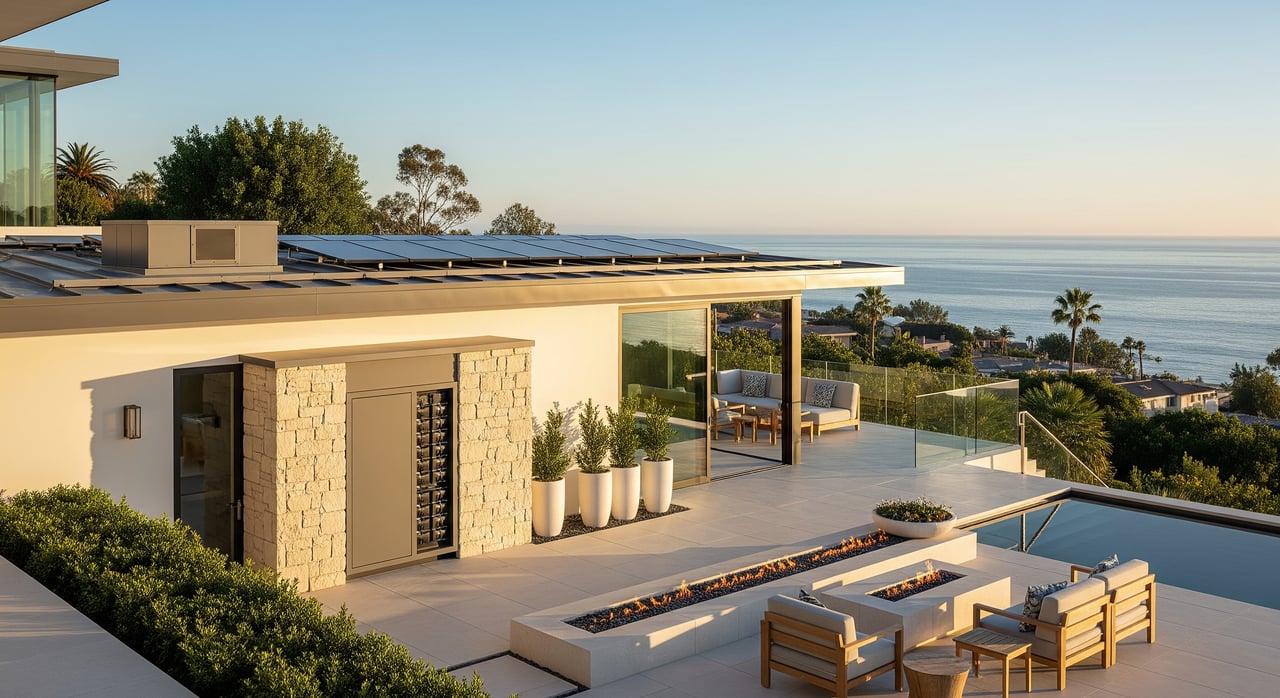
You can add solar and battery backup to a Pacific Palisades home without giving up the ocean view that drew you here in the first place. The key is a design-first approach that respects sightlines, microclimate, and local rules while delivering comfort and resilience when the grid blinks. In this guide, you will learn how to place panels so they complement architecture, choose the right-size battery for outages, and navigate LADWP interconnection and City of Los Angeles permits. Let’s dive in.
Why Palisades homes are different
Pacific Palisades sits on coastal hills with morning marine layer, salty air, and seasonal winds. These conditions influence solar performance and maintenance. Salt spray and humidity accelerate corrosion and can lower the threshold for soiling, so you will likely wash panels more often than you would inland.
Many lots are on slopes with prized view corridors to the Pacific. Neighbors, mature trees, and canyon topography create complex shading patterns. That makes early solar access studies essential so you do not trade away energy yield for aesthetics, or vice versa.
Architecturally, rooflines and ridgelines are often visible from streets, parks, and adjacent homes. Homeowners and HOAs tend to prefer low-visibility installations. Some parcels fall under special hillside or view overlays within City of Los Angeles planning. That means more attention to placement and profile from the start.
Start with a site-first plan
A thoughtful pre-design process protects your views and streamlines approvals. Complete these steps before you pick equipment.
Complete a photographic survey
Capture high-resolution images and drone shots from public vantage points and likely neighbor perspectives. Document ridgelines and primary view corridors so you can test what will be visible once panels are installed.
Run shading and production studies
Model seasonal shade at winter and summer solstice. Compare candidate array locations with PV production modeling. This shows the energy tradeoffs of low-visibility placements, such as east or north roof planes, versus higher-output south or southwest planes.
Assess the roof and structure
Review orientation, pitch, material, and age. Confirm framing and seismic capacity. If the roof is within 5 to 7 years of end of life, replacement before PV is often the smarter long-term choice.
Check rules and covenants
Review HOA design guidelines and CC&Rs, and note any hillside or view overlay requirements. Early clarity on setbacks, height limits, and screening saves time and redesign later.
Preserve views with smart siting
You can often keep the silhouette clean while still generating meaningful energy. Focus on placement, profile, and integration.
Favor low-visibility roof planes
Prioritize roof faces that are not visible from public or primary neighbor viewpoints. On ocean-view homes, that often means arrays on north or less-visible east slopes when the production tradeoff is acceptable.
Set back from ridgelines and sightlines
Keep panels below the roof ridgeline or pulled back from eaves facing the view. Reducing the roofline silhouette helps preserve the home’s profile from a distance.
Consider ground, pergola, or carport arrays
A small ground array, pergola, or carport can add production while keeping the rooflines clean. Screen with carefully planned landscaping or low walls that do not create future shading. Expect additional review for grading, setbacks, and engineering.
Integrate PV into architecture
Solar pergolas, trellises, and low-profile carports can read as designed features, not add-ons. Roof-integrated or building-integrated modules may be suitable on visible planes, subject to structural and code review.
Refine materials and routing
Choose low-profile racking, frameless black-on-black modules, and black mounting hardware to minimize contrast. Align arrays with roof geometry and avoid off-angle patches. Conceal conduit and inverters in garages or utility closets where possible, and color match surface conduit to the exterior.
Build for coastal durability
Specify corrosion-resistant attachments and fasteners rated for coastal exposure. Confirm module and inverter warranties that recognize coastal conditions. Plan periodic washing to remove salt and pollen. Frequency depends on exposure and season.
Choose the right battery backup
A well-sized battery keeps essentials powered during outages and can support whole-home operation if that is your goal. Start with your resilience target, then match system type and capacity.
Decide your resilience goal
Pick a clear target. Examples include essentials for 12 hours or whole home for 4 to 8 hours. Your target determines capacity, inverter size, and cost more than your average daily consumption.
Understand system types
- AC-coupled storage pairs well with existing grid-tied PV. It adds flexibility for retrofits.
- DC-coupled or hybrid inverter systems are often preferred for new solar plus storage because they are more efficient with fewer conversions.
Most modern residential systems use lithium-ion batteries. Lithium iron phosphate (LFP) chemistries are common for homes because of their safety profile, cycle life, and deep depth of discharge.
Size for your home and lifestyle
Inventory your loads. Essential circuits typically draw about 1.5 to 3 kW continuous, which can include refrigeration, lighting, communications, and selected outlets or fans. Many modern Palisades homes consume 20 to 50+ kWh per day depending on size and HVAC.
Translate your goal into capacity. For example, if you target essentials at 3 kW for 12 hours, that is 36 kWh. Accounting for about 10 to 15 percent roundtrip losses, you would specify around 42 kWh usable capacity. Smaller banks in the 8 to 16 kWh range can cover essentials for several hours. Larger banks at 40+ kWh aim at whole-home resilience for many hours.
Check inverter power ratings. Make sure the continuous kW capacity covers expected loads and that surge capacity will start motors like AC compressors, pumps, and refrigerators.
Place batteries safely and discreetly
Battery siting must meet building, electrical, and fire codes. In Los Angeles, the Fire Department has guidelines for clearances, access, and signage. Common locations include a garage wall, a protected exterior wall near the service equipment, a conditioned equipment room, or a screened utility enclosure. Avoid heat exposure and follow manufacturer ventilation guidance.
If you have or want a generator
Coordinate the transfer equipment and controls so storage, solar, and generator resources operate safely. Plan sequencing under load, especially on hillside properties where access and equipment clearances are closely reviewed.
Plan for LADWP interconnection and permits
Permitting and utility approval shape timelines and design. Start early to keep your project on track.
Know the authorities
- City of Los Angeles Building and Safety handles structural, roofing, and electrical permits and inspections.
- Los Angeles Department of Water and Power manages interconnection, metering, and technical standards for your solar and storage system.
- Los Angeles Fire Department and the Fire Prevention Division review energy storage access, signage, and clearances.
- California Title 24 energy code and the National Electrical Code define many design, safety, and documentation requirements.
- HOA and CC&R rules, and any hillside or view overlays, may add design review and aesthetic constraints.
File the right applications
Submit your LADWP interconnection application early. Expect to provide a single-line diagram, proof of equipment listings for smart inverters, and any visible utility disconnects if required. For LADBS permits, plan sets typically include structural calculations, attachment details, roof layout, electrical line diagrams, labeling, and rapid shutdown documentation.
Budget realistic timelines
Simple rooftop solar permits can move in weeks. View-sensitive hillside projects with ground mounts or storage often take months. Structural engineering, possible geotechnical input, and design review can add steps. Allow extra lead time to avoid rush decisions that could impact aesthetics.
Design details that matter
Rapid shutdown requirements affect inverter locations and conduit routing. Structural loading governs attachment points and may require reinforcement on older roofs. Energy storage codes set ventilation, clearances, and signage that influence battery placement on your property.
Build the right project team
Quality outcomes in the Palisades depend on a multidisciplinary team that balances performance, code, and design.
- Architect or design professional to integrate PV and storage with the architecture and support any design review.
- Licensed solar contractor with hillside and coastal experience and a track record with LADWP interconnections.
- Structural engineer for roof certification and ground-mount foundations.
- Licensed electrician for service upgrades, subpanels for critical loads, and transfer equipment.
- Fire department liaison or consultant for energy storage code compliance and submittals.
- HOA or legal advisor to review CC&Rs when needed.
Cost, incentives, and payback factors
Expect projects on view-sensitive hillside properties to price above standard roof installs. Design, engineering, concealed routing, and permitting add complexity. Battery capacity and inverter topology also move the budget.
Consider incentives and financing. The federal Residential Clean Energy Credit has historically supported rooftop solar and qualifying storage. California and local utilities periodically offer storage and resiliency programs. Incentives and rules can change, so check current eligibility and consult your tax advisor. For financing, cash, green loans, and lease or power purchase options each have tradeoffs that affect ownership and incentives.
Quantify production versus visibility. Orienting arrays for minimal visibility, such as on east or north planes, will reduce annual energy compared to south or southwest placements. Use your shade and production model to put a number on that tradeoff and decide what fits your lifestyle and valuation goals.
Buyer and seller tips
For sellers preparing to list
- Document the roof age, structural status, and any pre-engineering. Buyers appreciate clarity.
- Commission a quick solar and shading pre-assessment to show feasible, low-visibility options. Renderings help buyers see what is possible without impacting views.
- If installing before listing, favor low-profile, black-on-black modules, clean conduit routing, and concealed equipment to align with luxury expectations.
- If adding storage, focus on a right-sized battery for essential backup with clear labeling and monitoring access.
For buyers evaluating a home
Request the site survey, roof details, and any HOA or overlay constraints so you understand placement options.
Ask for seasonal shade and production modeling with at least two array concepts, such as a low-visibility roof layout and a screened pergola or carport alternative.
Confirm interconnection history with LADWP if the home already has PV, and review inverter listings and monitoring for serviceability.
If outage resilience matters, price a critical-loads battery now so you can factor capacity, location, and code constraints into your plans.
A simple homeowner checklist
- Gather 12 months of electric bills, property photos from public viewpoints, and HOA or CC&R documents.
- Engage a solar designer to complete a shading study, rooftop 3D photomontage from key view locations, and an energy and resilience plan with a critical loads list.
- Inspect the roof and structure, and plan replacement if near end of life.
- Contact LADWP and LADBS early for interconnection and permit requirements.
- Coordinate with LAFD for battery siting guidance on clearances, access, and signage.
- Prepare visual renderings for HOA or city review to demonstrate minimal visual impact.
- Finalize components with coastal ratings, appropriate warranties, and required equipment listings. Plan for maintenance and monitoring.
When you pair a design-first solar approach with right-sized storage, you protect what matters most in the Palisades: your view, your comfort, and your home’s long-term value.
If you would like discreet guidance tailored to your property, our team can help you evaluate view-friendly options, assemble the right professionals, and position your home’s energy story for buyers. Request a Private Market Valuation from the Irene Dazzan-Palmer team today at Unknown Company.
FAQs
Will solar panels affect my ocean view in Pacific Palisades?
- With a site-specific shading and view analysis, panels can often be placed on less visible roof planes, set back from ridgelines, or integrated into a screened pergola or carport to preserve primary view corridors.
How big should my home battery be for outages in the Palisades?
- Size to your outage goal. For example, essentials at 3 kW for 12 hours need about 36 kWh plus 10 to 15 percent for losses, or roughly 42 kWh usable. Many homes use 10 to 40+ kWh depending on goals.
What is the best battery system type if I already have solar?
- AC-coupled storage is a straightforward retrofit with existing grid-tied PV. For new systems, DC-coupled or hybrid inverters are often more efficient overall.
How long do LADWP interconnection and City permits take?
- Simple rooftop permits can be processed in weeks. View-sensitive hillside projects with storage can take months due to engineering, design review, and multiple agency approvals. Start applications early.
Where can I place a battery in Los Angeles?
- Common locations include a garage wall, protected exterior wall, or a dedicated equipment room. Placement must meet building, electrical, and fire code requirements for clearances, access, and signage.